
Full Wrap vs Partial Wrap
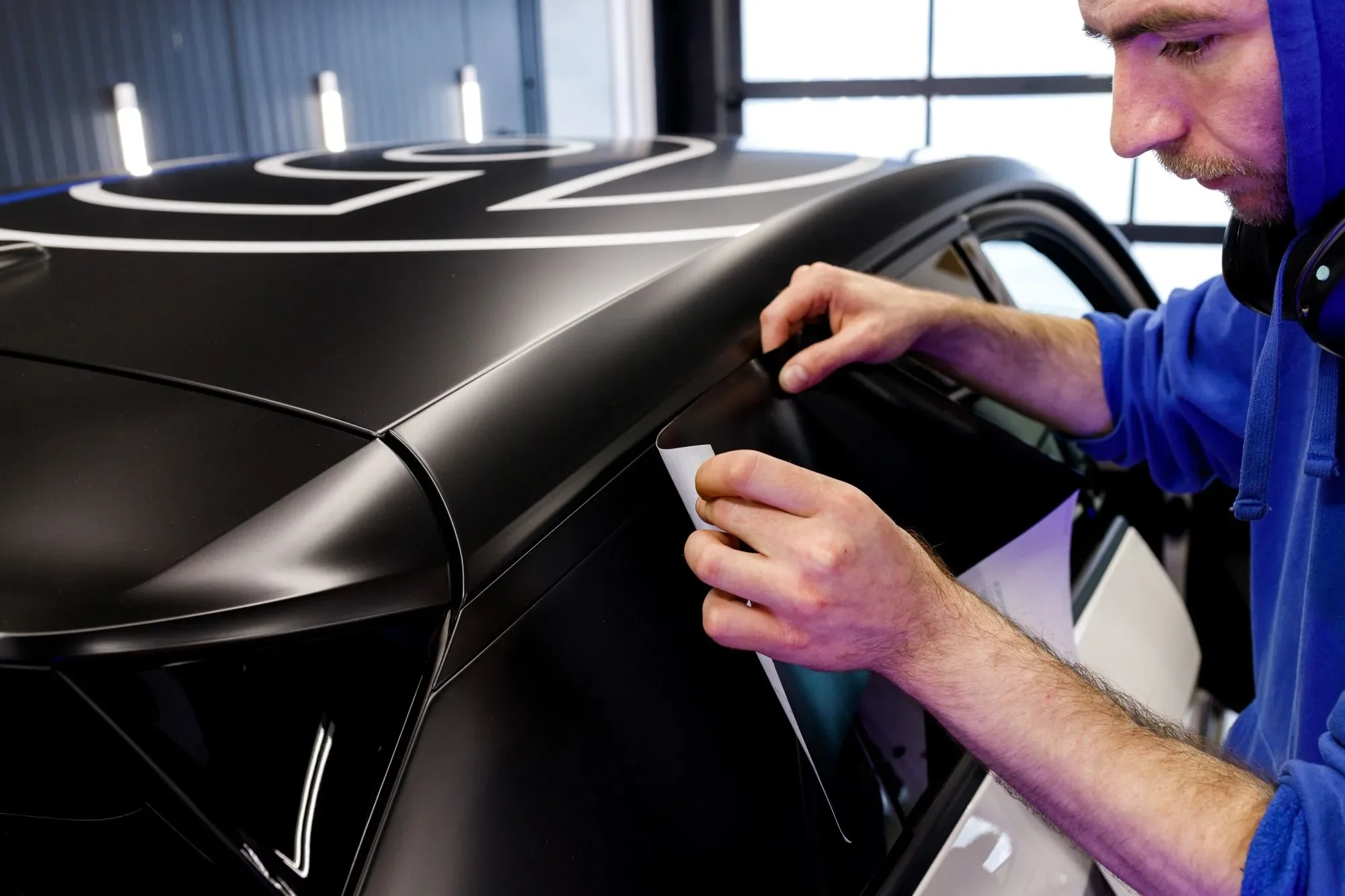
Choosing between a full wrap and a partial wrap depends on how much of the vehicle needs to change, how the design will interact with the original paint, and what the finished vehicle must accomplish. A full wrap suits complete colour changes and continuous custom designs, while a partial wrap works well for accents, selective coverage, and branding that incorporates the factory colour. Luminous Auto Salon helps Calgary vehicle owners compare both options based on their vehicle, design goals, budget, and intended use.
The Main Difference Between Full and Partial Vehicle Wraps
A full vehicle wrap covers the primary exterior body panels to create a unified finish across most of the vehicle. A partial wrap covers selected areas, such as the hood, roof, doors, rear quarter panels, or a defined section of the body.
“Full wrap” describes the overall level of coverage, but it does not guarantee that every exterior component is included. Bumpers, mirrors, door handles, spoilers, trim, and other pieces should be identified in the approved scope because vehicle construction and design requirements affect how each component is handled.
The practical difference is design flexibility. A full wrap allows the original exterior colour to be largely replaced. A partial wrap must coordinate with the exposed factory paint because that colour remains part of the finished appearance.
Neither option automatically includes door jambs, inner edges, or every surface visible when a panel is opened. These areas require additional material and labour when included. Both wrap types are intended to be removable, although the amount of coverage directly affects the eventual removal scope.
When a Full Vehicle Wrap Makes More Sense
A full wrap makes more sense when the design depends on consistent coverage across most exterior panels. It provides greater control over the finished appearance but generally requires more material, preparation, and installation time than selective coverage. The amount of trim or component removal depends on the vehicle, the installer’s application method, and the required edge finish.
Full Colour Change
A full wrap is generally the appropriate option when the goal is to change the vehicle’s dominant exterior colour. Covering the primary body panels prevents the original paint from interrupting the new appearance across doors, fenders, bumpers, and quarter panels.
The factory colour may still be visible inside door openings or around unwrapped inner surfaces. Wrapping these areas can create a more complete transformation when the doors are open, but it adds complexity and cost. The desired level of colour continuity should be established before the installation scope is approved.
Seamless Branding or Custom Design
Large graphics, patterns, gradients, and detailed custom designs often need full coverage to continue visually across adjacent panels. Full wraps provide a larger design area and reduce the need to end artwork where it conflicts with the concept.
Visual continuity does not mean the installation will contain no seams. Panel gaps, deep recesses, complex bumpers, inlays, and separate body components can require physical breaks in the vinyl. Artwork must account for these interruptions so logos, text, and important visual elements remain aligned and readable.
Full coverage is particularly useful when the original paint conflicts with the brand palette or custom design. It allows the exposed factory colour to be minimized instead of forcing the artwork to work around it.
Covering Large Exterior Areas
A full wrap becomes more practical when the project already includes most major body panels. Selecting the hood, roof, doors, bumpers, fenders, and quarter panels separately can approach the material and labour requirements of full coverage without creating the same visual continuity.
There is no fixed percentage at which a partial wrap automatically becomes a full wrap. The comparison should consider the number, dimensions, and complexity of the included panels. Several difficult panels can require more labour than a larger but simpler coverage area.
When a Partial Vehicle Wrap Makes More Sense
A partial wrap is appropriate when the objective can be achieved without changing the entire exterior. The strongest partial designs use the original paint deliberately instead of making the uncovered areas appear unfinished.
Accent Styling and Chrome Delete
Partial coverage works well for roofs, hoods, mirror caps, spoilers, racing stripes, and other defined accent areas. This approach suits owners who want to change specific visual details while retaining the vehicle’s factory colour.
A chrome delete is normally scoped separately from a conventional partial body wrap. It targets exterior chrome trim around windows, grilles, doors, or other components rather than covering broad painted panels. In both applications, the selected vinyl should complement or intentionally contrast with the surrounding paint.
Business Graphics and Fleet Branding
A commercial vehicle does not always require complete coverage to communicate a business name, services, and contact information. Door graphics, rear-panel coverage, decals, or a strategically placed printed design can provide sufficient space when the factory colour supports the brand.
Partial branding becomes less effective when the factory paint conflicts with the brand palette, reduces graphic contrast, or leaves too little space for readable information. In those cases, greater coverage may be needed to establish a controlled background for the design.
Fleet consistency also depends on the vehicles’ existing colours. A partial design can be repeated efficiently across different body styles when the exposed paint colours are consistent. Fleets containing several factory colours may require vehicle-specific layouts or additional coverage to maintain a uniform appearance.
Businesses comparing coverage options can review Luminous Auto Salon’s custom and commercial vehicle wrap services.
Budget-Friendly Visual Updates
A partial wrap generally requires less vinyl and installation labour than a comparable full wrap. It can direct the available budget toward the panels that create the greatest visual change or provide the most useful branding space.
Lower coverage does not make every partial project inexpensive. Complex curves, extensive trimming, custom printing, multiple separated installation areas, and difficult component access can increase labour. A concentrated design placed across a few connected panels is usually more cost-efficient than several disconnected wrapped sections.
Full Wrap vs Partial Wrap Cost Factors
Coverage is a major cost factor, but it is not the only one. The final scope depends on the vehicle, selected vinyl system, artwork, and installation requirements.
Vinyl coverage: A full wrap requires material for the primary exterior body panels. A partial wrap uses less material because it covers only selected panels or design areas.
Vehicle and panel size: Larger vehicles generally require more material and installation time. For partial wraps, cost depends on the dimensions of the selected panels rather than the overall percentage left uncovered.
Body complexity: Curves, vents, spoilers, recessed areas, and complex bumpers require additional installation time. A small but difficult panel can cost more to wrap than a larger, flatter area.
Vinyl system: The manufacturer, film series, adhesive system, and required laminate affect material cost for both full and partial wraps.
Design work: Full printed wraps require artwork that aligns across the vehicle. Partial-wrap artwork must transition intentionally into the exposed factory paint.
Fleet adaptation: Commercial designs may require adjustments for different vehicle models, body configurations, factory colours, and available panel space.
Preparation and component access: Trim, handles, badges, lights, or accessories may need to be removed or worked around. Full wraps usually involve more components, while partial-wrap preparation is limited to the selected areas.
Door jambs and inner surfaces: These areas are typically priced separately from standard exterior coverage when requested.
Existing vinyl removal: Previous film must be removed before new vinyl is installed. The added labour depends on its coverage, age, condition, and ease of removal.
Surface correction: Every included panel must provide a stable surface for installation. Paint defects or previous repairs can add preparation work or require the affected panel to be excluded.
A quote should identify the exact panels and components being wrapped, the selected film, whether the wrap is solid-colour or printed, and whether removal or surface correction is required. Comparing projects by coverage percentage alone can be misleading when the vehicles and designs differ.
Design, Durability, and Maintenance Differences
Full and partial wraps can use equivalent automotive vinyl systems, so coverage alone does not determine durability. Performance varies by manufacturer, film series, adhesive, printed ink and laminate combination, installation quality, sun exposure, road use, and cleaning habits. Horizontal surfaces typically receive more direct UV and environmental exposure than vertical panels.
Full wraps require consistent vinyl care across most of the exterior. Partial wraps require the owner to maintain both vinyl and exposed paint. These surfaces can age differently because the wrapped areas are shielded from some UV exposure while the uncovered paint remains exposed. That difference can become more noticeable over time or after the vinyl is removed.
Physical seams and inlays occur within wrapped areas when one piece of vinyl cannot conform reliably to a complex surface. Partial-wrap termination edges are different. They are intentional boundaries where the vinyl ends against exposed paint. Natural body lines can make these transitions appear deliberate and help keep exposed edges away from high-contact areas.
Colour matching also has limits. Vinyl can complement factory paint, but it may not reproduce the paint colour exactly because vinyl and automotive paint reflect light differently. Matching becomes more difficult when the paint has faded or contains metallic or pearlescent effects. An intentional contrasting colour often produces a more predictable result than an attempted near-match.
Damage repairs can also differ. A simple partial wrap may allow one affected section to be replaced independently. Repairing a full colour-change or printed wrap can be more difficult if the original film has aged, the replacement comes from a different production batch, or printed artwork must realign across adjacent panels.
Gentle hand washing and prompt removal of contaminants help preserve either option. High-pressure spray should not be directed closely against seams, inlays, or termination edges because concentrated pressure can lift the vinyl.
Choosing the Right Wrap Option for Your Vehicle
Choose a full wrap when the original exterior colour needs to be replaced, the artwork must continue across most body panels, or selective coverage would compromise the design. Choose a partial wrap when the factory paint supports the concept and the objective can be achieved through accents, graphics, or strategic panel coverage.
Personal vehicles are usually guided by the desired appearance, budget, and how much of the factory finish should remain visible. Business vehicles should prioritize readable branding, consistent fleet presentation, and efficient use of the available surface area.
Neither option is automatically better for a leased vehicle. A partial wrap reduces the amount of vinyl that must eventually be removed, while a full wrap shields more of the exterior paint from routine exposure during the lease. The lease agreement and leasing company determine whether vinyl modifications are permitted, so any required approval should be obtained before installation.
Long-term removability depends on the film’s age, environmental exposure, installation, removal method, and condition of the underlying finish. Properly installed automotive vinyl is generally removable from stable original paint. Repainted panels, loose clear coat, rust, deep chips, or failing body repairs create a greater risk of paint lifting or visible defects during installation and removal.
The vehicle should therefore be inspected before the design is finalized. Any unsuitable panels must be repaired, excluded from coverage, or addressed through a revised design. Vinyl should not be relied upon to stabilize failing paint or conceal structural surface damage.
Vehicle Wrap Planning With Luminous Auto Salon
Luminous Auto Salon plans full and partial wraps around the vehicle’s body configuration, existing colour, selected coverage, and design requirements. The company offers colour-change wraps, partial wraps, accent applications, chrome deletes, and commercial graphics using automotive films from 3M, Avery Dennison, and KPMF.
For commercial projects, in-house design support allows the artwork to be adapted to the available panels and vehicle shape before installation. For personal vehicles, planning confirms whether the intended result requires full exterior coverage or can be achieved through selected panels and accents.
