
What Happens to Your Paint When PPF Is Removed?
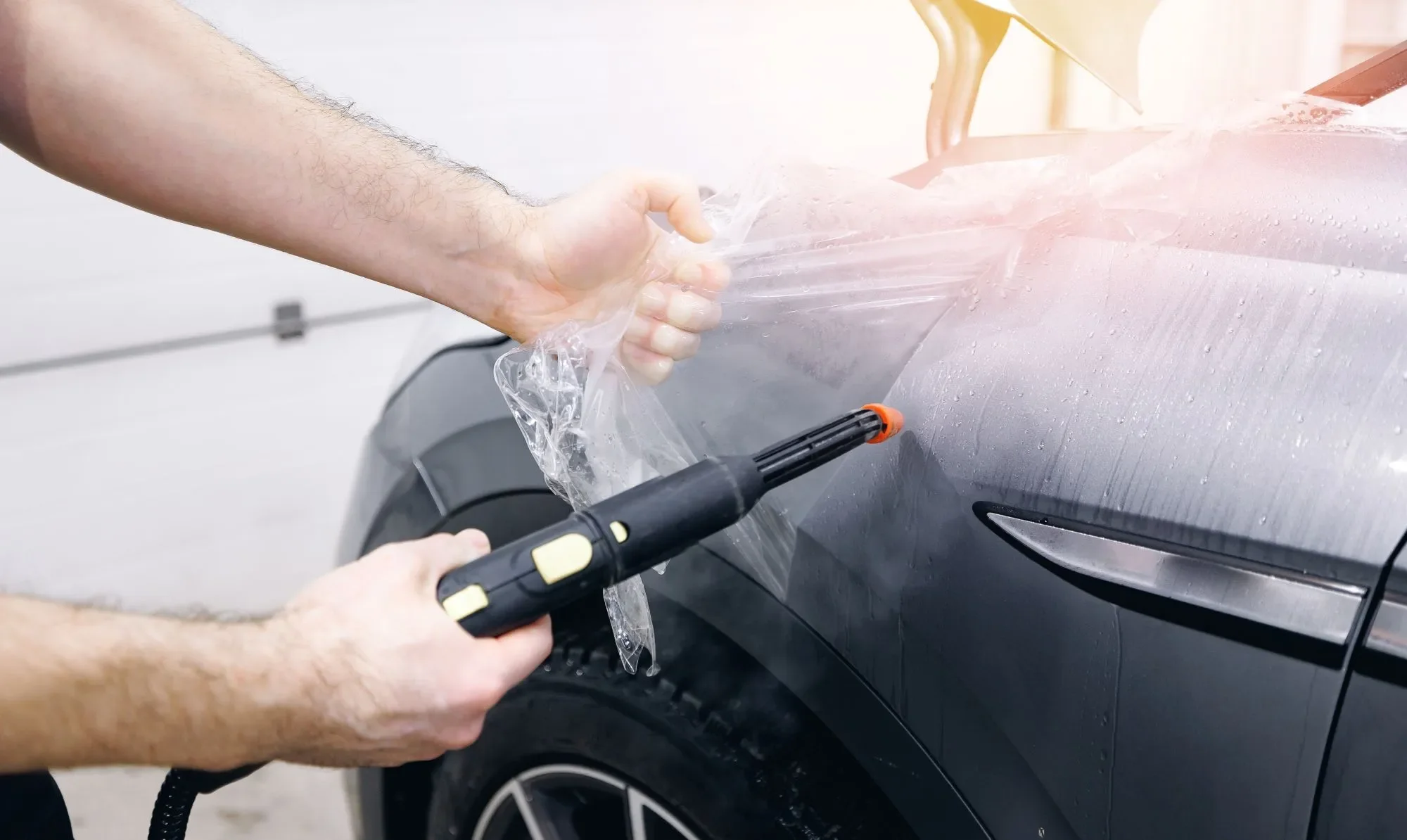
Paint protection film removal normally reveals the same paint the film was installed over, provided the finish was stable and the film is removed correctly. Risk increases when panels have been repainted, the film has deteriorated, or removal begins without checking existing damage. Luminous Auto Salon assesses both the PPF and underlying finish before determining the appropriate removal method.
Why PPF Removal Is Usually Safe on Factory Paint
Factory paint is applied and cured under controlled manufacturing conditions, creating a strong bond between the colour coat, clear coat, and underlying panel. Properly installed PPF uses a pressure-sensitive adhesive that bonds to the clear coat without becoming part of the paint system.
During professional removal, controlled heat or steam softens the adhesive. The film is then pulled back at an appropriate angle with steady tension. This limits unnecessary force on the clear coat and helps the adhesive release with the film.
Factory application improves removal predictability, but the paint’s current condition remains decisive. Clear coat failure, corrosion, previous impact damage, and deep chips can make an original finish vulnerable even if the panel has never been repainted.
PPF warranty length and expected service life vary by product. Neither creates a guaranteed safe-removal deadline because UV exposure, climate, maintenance, storage, and film condition also affect removability. Visible deterioration can justify earlier removal, while film beyond its warranty period is not automatically unsafe to remove.
Luminous Auto Salon’s paint protection film services include different coverage options for protecting stable painted surfaces.
When PPF Removal Can Put Paint at Risk
Most removal problems involve the condition of the film, the condition of the paint, or the technique used. Identifying these risks before pulling the film allows the removal method and expectations to be adjusted.
Repainted Panels or Poor Paintwork
Repainted panels are generally less predictable than factory-painted panels. Their removal risk depends on how the panel was prepared, which paint system was used, whether each layer bonded correctly, and whether the finish cured before PPF installation.
The refinishing shop or paint-system manufacturer should confirm the required cure period before PPF is applied. There is no universal waiting period for every repair because paint products, application methods, bake cycles, and environmental conditions differ.
A properly completed repaint does not automatically fail during PPF removal. However, weak primer adhesion, contamination, insufficient curing, poor clear coat bonding, or paint applied over an unstable previous finish can allow part of the paint system to lift with the film.
Owners do not always know that a panel has been repaired. Paint-thickness variation, overspray, masking lines, colour differences, unusual texture, and repair records can indicate refinishing. These signs help identify risk but cannot confirm how strongly the repaint is bonded.
Old, Brittle, or Neglected Film
PPF gradually changes as it is exposed to UV radiation, heat cycles, winter conditions, road contamination, and repeated washing. Film that has deteriorated may become brittle, cracked, discoloured, rough, or difficult to separate from its adhesive.
Expired warranty coverage does not automatically mean the film has failed or become unsafe to remove. Conversely, visible deterioration can require removal before the expected service life ends. The film’s physical condition matters more than age alone.
Brittle film can break into small sections instead of releasing as a flexible sheet. The top layer may also separate from the adhesive or other film layers, creating a multi-stage removal process. Adhesive can remain on the paint after the film separates, increasing the time and care required.
Cracking, extensive yellowing, delamination, lifting, or a rough surface should be assessed before the film deteriorates further. Early removal is usually more manageable than waiting until the material fragments during the process.
Aggressive Removal Methods
Pulling PPF from a cold panel, using excessive force, or lifting it at an unsuitable angle can place unnecessary stress on the paint. Rapid pulling also makes it harder to stop when the film encounters a weak area.
Removal temperature and technique should follow the requirements of the installed film. Controlled heat or steam can soften the adhesive, but excessive heat can damage the film, painted surface, plastic trim, lights, or nearby components.
Metal blades should not be used directly against painted panels to start an edge or scrape away adhesive. Strong solvents are also unsuitable unless their compatibility with the paint and film adhesive has been confirmed. Improvised tools and chemicals can create damage that the PPF itself would not have caused.
Existing Chips, Scratches, or Lifting Edges
A deep stone chip can fracture the clear coat and colour layers beneath the PPF. If paint around the impact is already loose, removal tension can detach the weakened fragment. This does not necessarily mean the film damaged sound paint, but removal can expose damage that was previously hidden or held in place.
Scratches, peeling clear coat, corrosion, and previous edge damage create similar concerns. Lifted PPF edges can also collect dirt and contamination, making it harder to evaluate the paint until the area is cleaned.
These locations should be identified before removal starts. The installer can then reduce tension, work in smaller sections, and stop if the paint begins reacting unexpectedly.
What Professional PPF Removal Should Involve
Professional removal should adapt to the installed film and the condition of each covered panel. A typical assessment and removal process includes:
Confirming the vehicle’s history: The installer should ask about repainting, collision repairs, panel replacement, previous PPF work, and the approximate age of the film.
Identifying the installed film where possible: The product and installation date help determine the appropriate heat and removal technique. Unknown film requires a cautious test because products can respond differently.
Inspecting the PPF: Cracking, yellowing, brittleness, delamination, lifting edges, contamination, and impact damage help determine how difficult removal may be.
Inspecting visible paint: Chips, peeling clear coat, corrosion, repair lines, and other unstable areas should be documented before the film is disturbed.
Cleaning the exterior: Surface dirt must be removed so it does not scratch exposed paint or conceal film edges and panel defects.
Testing a controlled area: Beginning in a suitable location allows the installer to evaluate how the film, adhesive, and paint respond before proceeding across the panel.
Applying controlled heat or steam: The temperature should soften the adhesive without overheating the film, paint, trim, lights, or nearby components.
Using controlled tension and removal angles: The film should be pulled steadily according to its product requirements rather than torn upward or removed with abrupt force.
Working around damaged areas carefully: Brittle film, chipped paint, and repainted sections may need to be handled in smaller pieces with reduced tension.
Stopping if paint begins to lift: The affected area should be documented, and the owner should be advised of the risk before removal continues.
Removing adhesive residue safely: Remaining adhesive should be treated with paint-compatible products rather than aggressive scraping or unverified solvents.
Completing a post-removal inspection: The exposed finish should be evaluated before correction or reprotection is selected.
A professional process reduces avoidable risk, but it cannot guarantee that unstable paint will remain attached. Existing paint failure may only become fully visible once the film begins to release.
What Your Paint May Look Like After Film Removal
Stable factory paint often appears clean and well preserved after PPF is removed. The film may have limited direct exposure to road debris, environmental contamination, and UV radiation while it was installed.
The protected paint does not always look identical to adjacent uncovered areas. Exposed panels may have accumulated fading, swirl marks, oxidation, or environmental wear, creating a visible difference beside the newly uncovered finish.
Partial-front installations can leave a line where the film ended. Surface residue and embedded contamination may be removable through cleaning, decontamination, or polishing. UV-related colour differences, faded base colour, and mismatched repainting can remain after detailing.
Adhesive residue may create haze, streaking, or an uneven texture after older film is removed. Residue alone does not mean the clear coat has failed. The adhesive must be removed safely before the paint’s actual condition can be judged.
Removal can also reveal pre-existing defects or damage that occurred beneath or through the film. Deep impacts can mark the paint despite the presence of PPF, while scratches, repaired areas, or clear coat problems may have existed before installation. Removing the film reveals the panel’s actual condition, not necessarily a flawless surface.
What to Do After Old PPF Comes Off
The next step depends on what the exposed paint requires and how the vehicle will be used. Stable paint can be left unprotected after cleaning, but it will no longer receive PPF’s physical protection against road debris and stone impacts. Inspection must come first because correction, body repair, new PPF, and ceramic coating address different conditions.
Paint Inspection
The exposed panels should be cleaned and examined under suitable lighting. The inspection should look for adhesive residue, contamination, scratches, water spotting, chips, clear coat failure, staining, and differences between protected and unprotected areas.
Paint depth and repair history may also need to be considered before polishing. If removal reveals peeling paint, corrosion, exposed base coat, or a failed repaint, the panel requires body and paint repair rather than detailing alone. The inspection establishes whether the finish can remain as it is, be corrected, or receive a new protective product.
Paint Correction
Paint correction can address removable defects in the clear coat, including light swirls, haze, oxidation, and some scratches. It can also improve surface-level differences between paint that was previously covered and surrounding exposed areas.
Correction is not automatically required after every PPF removal. Preserved paint may need only adhesive removal, decontamination, and preparation for the next protective product.
Polishing removes a controlled amount of clear coat and cannot restore faded base colour, replace missing paint, repair peeling clear coat, or eliminate a mismatch between factory and repainted panels. The available paint thickness and defect depth should be evaluated before correction begins.
New PPF or Ceramic Coating
New PPF is appropriate when the vehicle still needs a physical barrier against stone chips, road debris, and abrasion. The old film and adhesive must be fully removed, and the paint must be stable, clean, and prepared for adhesion before replacement film is installed.
Any ceramic coating, wax, sealant, or residue on panels being rewrapped may interfere with adhesion. These products must be removed or prepared according to the PPF manufacturer’s requirements before installation.
Ceramic coating can improve gloss, water behaviour, contamination resistance, and cleaning. It does not provide the same impact protection as PPF, so it should not be treated as a direct substitute when stone-chip protection remains the priority.
When both products are selected, the replacement PPF is generally installed before ceramic coating. Compatible coating can then be applied to exposed paint and, where approved, over the installed film. This sequence prevents a coating from interfering with PPF adhesion.
Safe PPF Removal and Reprotection With Luminous Auto Salon
Luminous Auto Salon applies the removal assessment to a clear reprotection plan based on the exposed paint and the vehicle’s road use. Stable panels can receive replacement PPF, while paint defects may require correction or body repair before another protective layer is installed.
Available PPF coverage includes partial-front, full-front, daily-driver, and complete-vehicle options. Paint correction or ceramic coating may also be considered when the exposed finish requires refinement or a different type of surface protection.
